



Pinterest Idea Pins SEO Strategy 2026: What Still Works
Idea Pins changed how Pinterest handles native content. How to optimize Idea Pins for SEO in 2026, when to use them, and how they fit your keyword strategy.
Idea Pins changed how Pinterest handles native content. Learn how to optimize Idea Pins for SEO in 2026, when to use them, and how they fit into your overall Pinterest keyword strategy.
If you have searched for an Idea Pins strategy recently, you have probably noticed something odd: the advice all sounds slightly out of date, because the format it describes no longer exists. Pinterest retired Idea Pins as a standalone format and folded their multi-page storytelling into regular Pins. Any 2026 guide that pretends otherwise is sending you to build on a closed road.
This guide is the honest version: what actually happened to the format, which parts of the old Idea Pin playbook still earn their keep, and how to rebuild story-style content as search-ready pins that carry full titles, descriptions, and links.
What Happened to Idea Pins
Idea Pins were Pinterest's story format: full-screen, multi-page sequences of video and images that viewers tapped through, page by page. They were built for engagement inside Pinterest — follows, reactions, and comments — and for most of their life they handled the things search content needs most rather weakly. Outbound links arrived late and limited, and the format's text lived largely on the pages themselves rather than in the fields Pinterest search reads best.
Pinterest then simplified its creation flow and merged the format into standard Pins. The separate Idea Pin type disappeared: you now create image pins and video pins, and the multi-page story as a distinct object is gone. Existing story content was folded into the regular pin system rather than deleted, but no new content can be published in the old format.
Why this matters for SEO: the merger quietly fixed the format's biggest weakness. A standard pin carries a keyword title, a full description, and a direct link to your page — the complete search package. Story-style content that used to trap its value inside Pinterest can now point home.
What Still Works From the Idea Pin Playbook
The format's tactics were sound; only the container closed. Four of them transfer directly:
- Hook on the first frame. Idea Pins lived or died on page one. A video pin's opening second and a standard pin's image-plus-title do the same job: state the promise before asking for attention.
- One idea per step. Stories forced sequencing — step one, step two, result. That discipline maps perfectly onto tutorial video pins and onto a series of standard pins saved in order on one board, each targeting its own step-level keyword.
- Legible overlay text. Big, high-contrast, few words per frame. On image pins, overlay text is now also supporting evidence for what the pin is about — our guide to Pinterest text overlays covers sizes and placement in detail.
- Vertical-first design. The 2:3 canvas did not change. If your old story assets are vertical, they are already shaped for today's pins — check the current specs in our pin sizes and formats guide before re-exporting.
The 2026 Workflow: Rebuilding a Story Idea as a Search-Ready Pin
Take an old Idea Pin concept — or any story you planned to tell in pages — and rebuild it in this order:
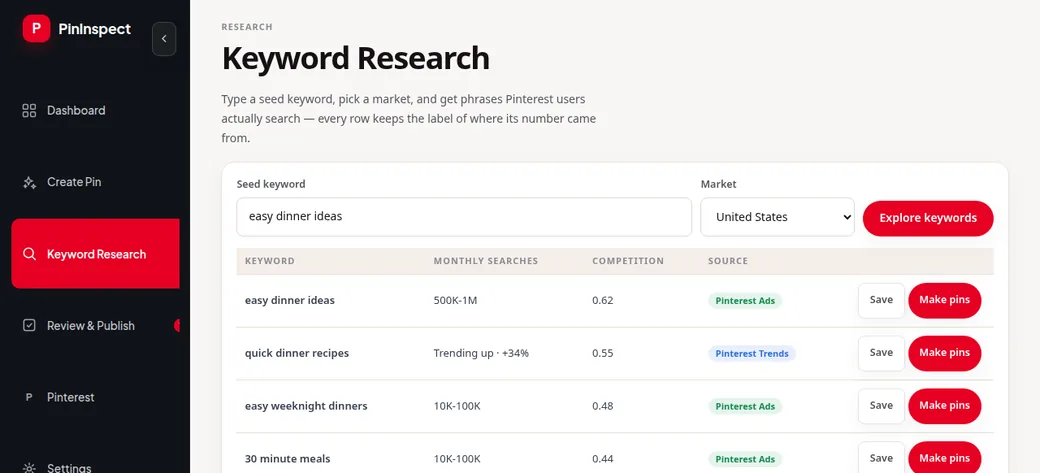
- Start from the keyword, not the footage. Choose the phrase the pin should be found for, using the same research you would for any pin. The story serves the search, not the other way round.
- Script the sequence. Write the steps as you would have paged them: hook, steps in order, payoff. Five to eight beats is the natural story length.
- Choose the container. If the steps move — a process, a transformation, a recipe — film or assemble them as one video pin. If each step is a still-worthy image, publish a pin series on a dedicated board instead, one keyword per step.
- Write the title and description like a search document. Primary keyword early in the title; the description carries the supporting phrases and names what the click delivers. This is the step the old format never let you do properly.
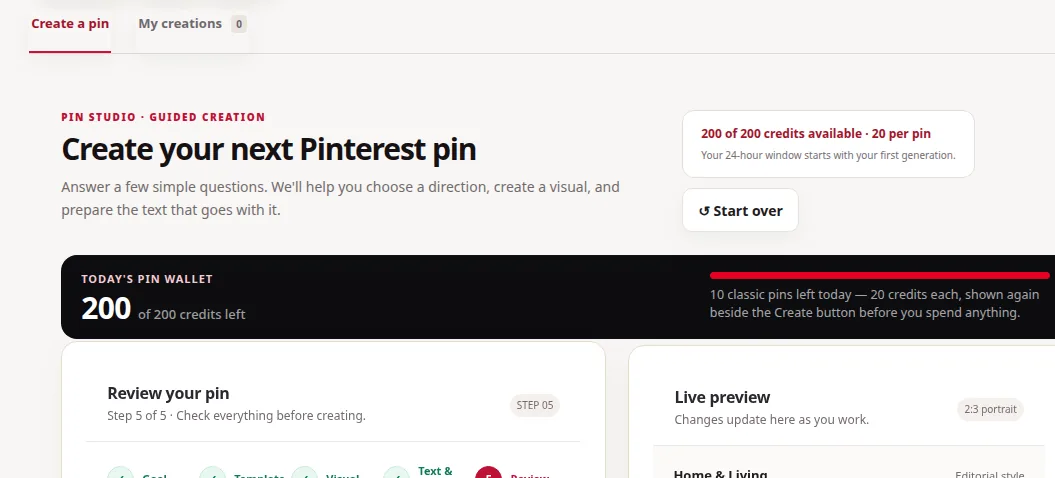
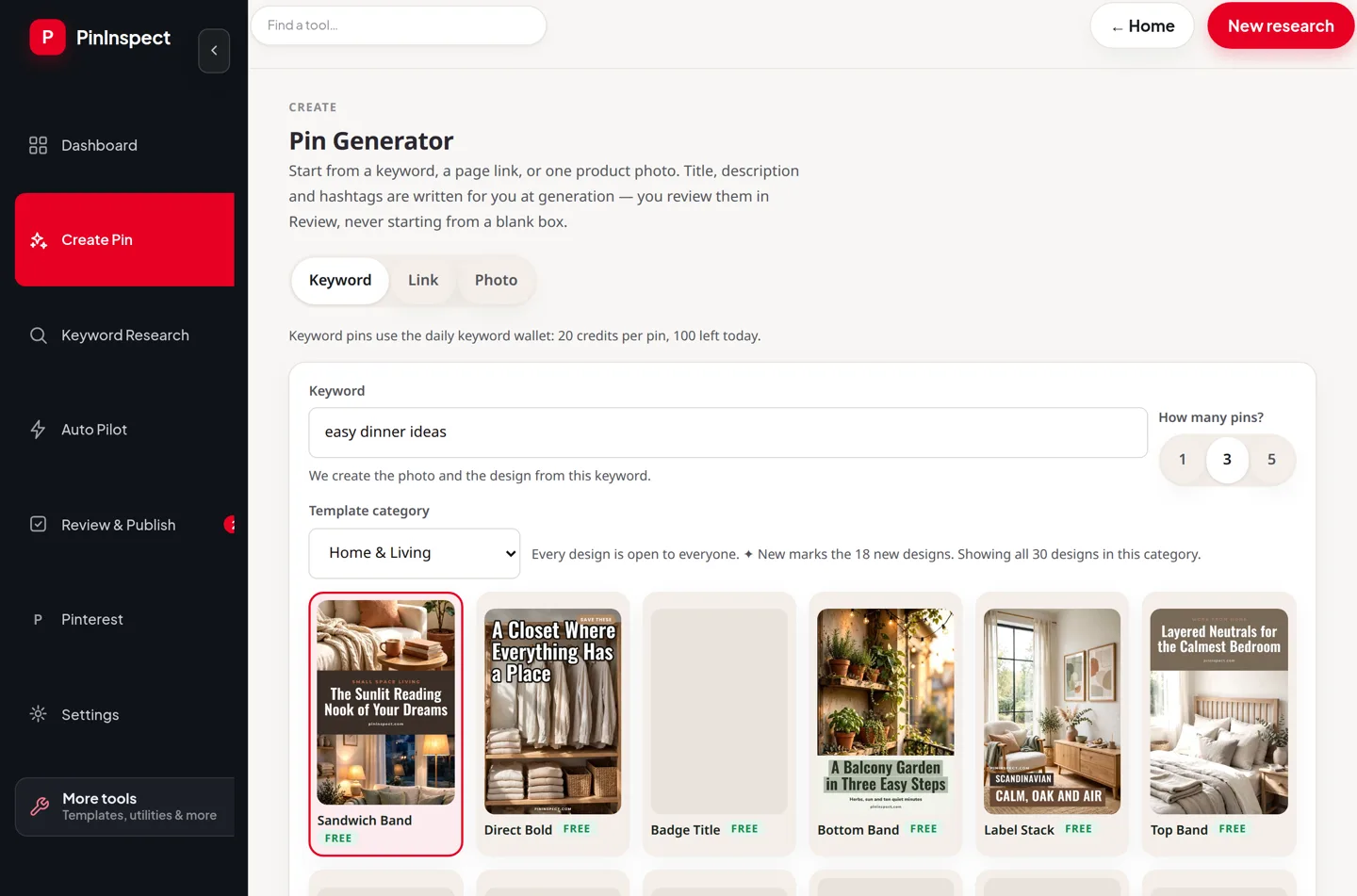
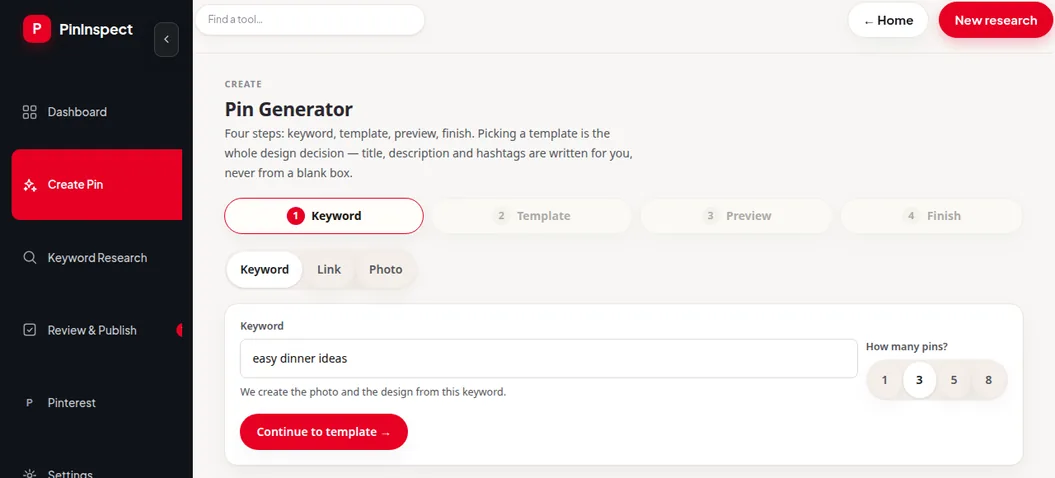
- Attach the link and publish fresh. Standard pins link out — send viewers to the page that completes the story. Build the pin with a pin generator if you want the design and the keyword fields handled in one pass.
That workflow is the whole strategy in miniature, and it generalises: our step-by-step guide on how to create Pinterest pins walks the same path for pin types that never went near the story format.
Optimize every pin field before you publish
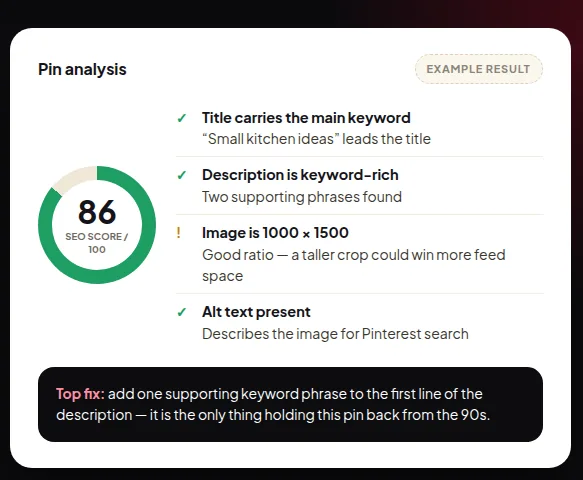
PinInspect Pin Analyzer checks your title, description, keyword placement, and board relevance so you catch issues before they cost you impressions.
Which Format Should You Choose Now? A Decision Guide
With the story format gone, the real choice is between a video pin, a single strong image pin, and a series. Decide by the shape of the content, not by habit:
| Your content | Best container | Why |
|---|---|---|
| A process with visible steps (recipe, craft, routine) | Video pin | Motion shows sequence better than any series of stills, and the hook frame does the old page-one job. |
| Steps that each deserve their own search | Pin series on one board | Each pin targets its own step-level keyword while the board collects the full topic. |
| One striking result or idea | Single image pin | No sequence to tell — spend the effort on the title, description, and overlay instead. |
| An old Idea Pin that performed well | Rebuild as video or series | The concept is proven; only the container expired. Re-keyword it as you rebuild. |
Idea Pin Habits to Retire
- Designing for a format label that no longer exists. Templates and checklists built for "Idea Pins" describe a closed door. Judge every tactic by whether it works on a standard or video pin today.
- Putting the keywords only on the frames. In the story era, on-image text carried the message. Now the title and description are the searchable text — frames support them, never replace them.
- Ignoring the link. The story format trained creators to accept engagement without traffic. Standard pins link out on every publish; a story pin with no destination page wastes its best asset.
- Measuring success by in-app reactions alone. Follows and comments were the story format's ceiling. For search content, saves, outbound clicks, and search impressions are the numbers that compound.
- Recycling old stories without re-keywording. Rebuilding the container but keeping vague titles throws away the merger's main gift — full search fields.
Everything on that list has the same root cause: optimising for how Pinterest worked, not how it works. The toolkit on the PinInspect homepage is built around the current fields — title, description, link — which is where this strategy now lives.
Triage: What To Do With Story Content You Already Published
If you built a library of Idea Pins, do not delete it in a tidy-up — and do not leave all of it on autopilot either. Sort each piece into one of three buckets:
- Leave it. Stories on topics you no longer pursue, or whose pages have been retired. They cost nothing where they are, and deleting content never helps the content that remains.
- Support it. Stories on topics still central to your site. You cannot re-optimise the old object itself, but you can publish a modern pin on the same topic — full title, description, and link — and let the new pin carry the search weight while the old one keeps whatever audience it still reaches.
- Rebuild it. Your proven concepts: the stories that earned strong saves and reactions in their day. These deserve the full workflow from the section above — re-keyworded, re-containered as a video pin or a series, and linked to the page that completes the story. Proven demand plus modern search fields is the closest thing this format change offers to a free win.
Decide with your analytics open: a story that is still collecting saves has an audience worth serving with a modern version; a story that never moved does not become valuable by being rebuilt. Rebuild in priority order — strongest historical performers first — and treat everything below them as archive.
Quick Reference: The Story-Pin Checklist
For any story-style content you rebuild, run this list before publishing:
📋 Story-Pin Checklist
Frequently Asked Questions
Start Optimizing Every Pin With Confidence
Strong Pinterest SEO comes from consistently applying the right optimizations across every pin you publish. Use PinInspect to check your keyword placement, analyze competitor pins, and find the keyword angles that are already driving traffic in your niche.